OVERVIEW
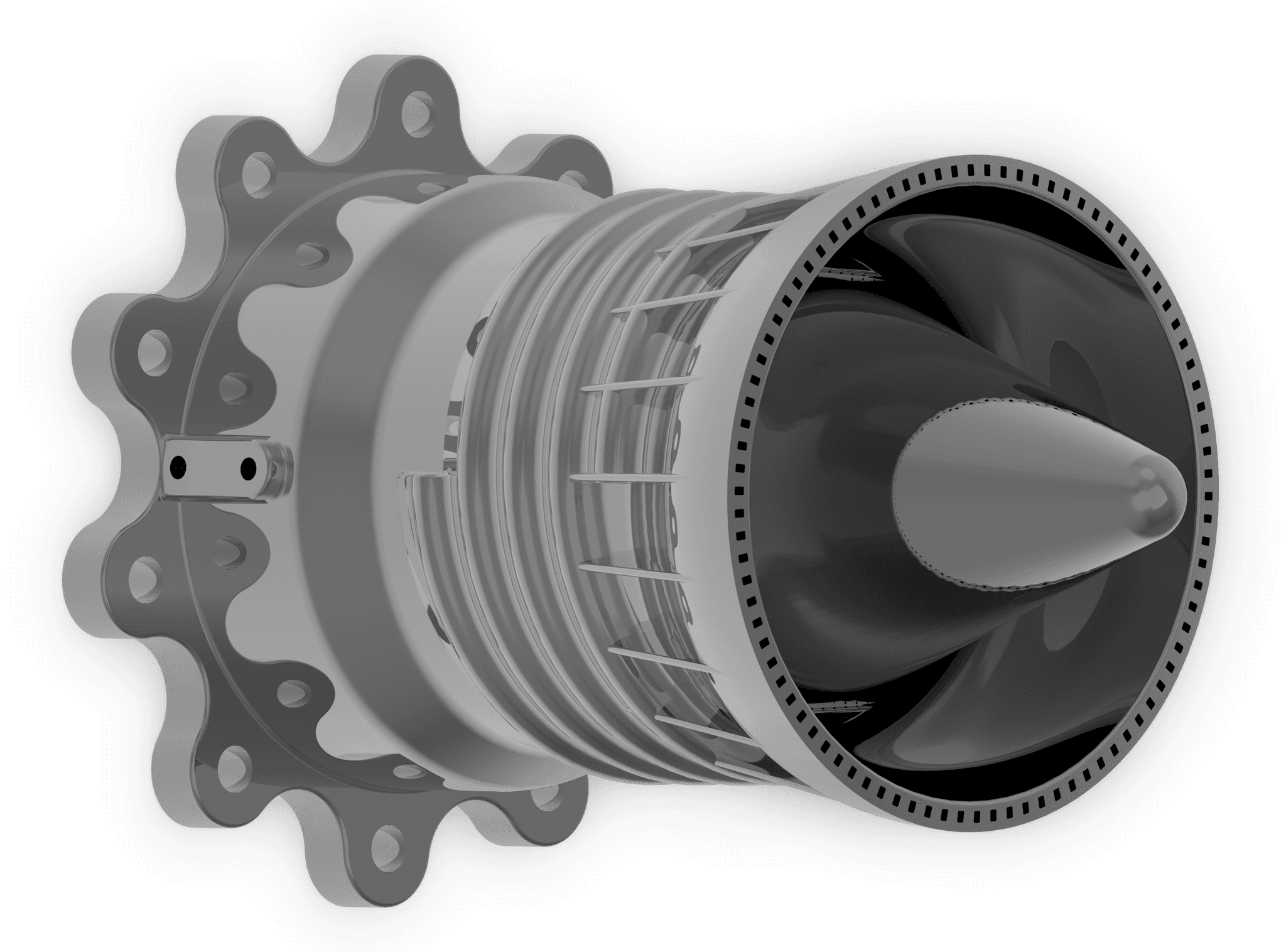
Mark 1 is a cutting-edge rotating detonation rocket engine engineered by Project Wavefront. Designed to reach thermal equilibrium for long-duration hotfires, it pioneers detonation-wave combustion in a compact, reusable, reignitable platform.
KEY SPECS

ARCHITECTURE
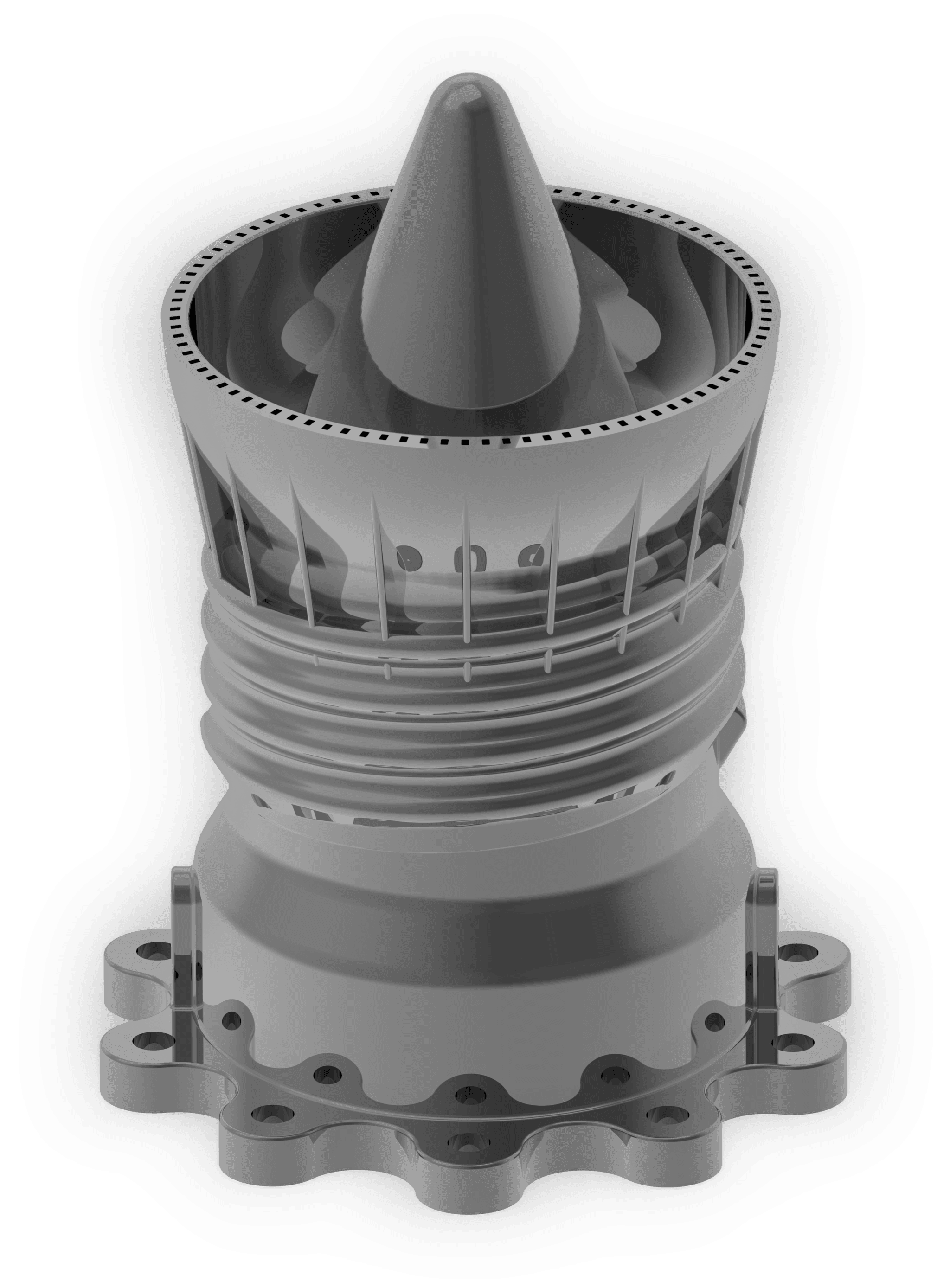
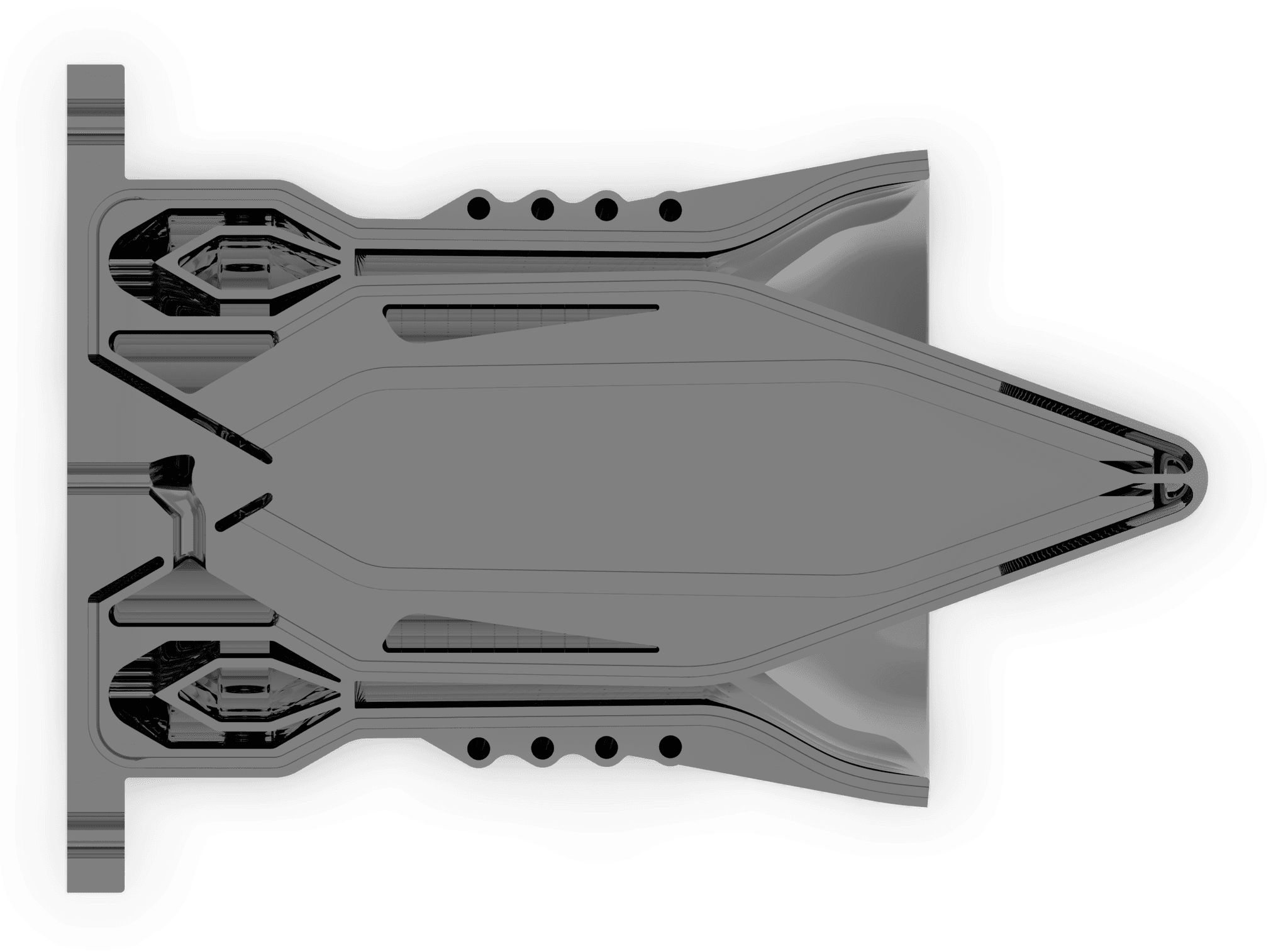
Featuring an annular combustion chamber with integrated cooling channels, the Mark 1's architecture optimizes detonation propagation, heat transfer, and engine efficiency. The engine is being concurrently developed with an advanced electronic control/data collection suite and a purpose-built test stand.
DETONATION INNOVATION
The RDRE leverages continuous detonation waves to improve thermodynamic efficiency beyond conventional deflagration-based engines. This breakthrough reduces propellant consumption while achieving higher chamber pressures and stable thrust output.
MARK I TESTING & ROADMAP
Mark 1 will undergo hot-fire testing on Wavefront's custom-built test stand in January 2027, aiming to reach thermal equilibrium in the process. Future iterations focus on full-duration burn stability, cryogenic fuel integration, and eventual flight-qualified units for launch vehicle prototypes.
Project Kickoff
June 1, 2025
Josh and Sam found Project Wavefront with 5 engineers. Technical requirements and a project roadmap are established, with initial design work beginning.
Nonprofit Corporation Registration
June 24, 2025
Project Wavefront is officially registered as a nonprofit corporation in the state of Pennsylvania.
Converge CFD Sponsors Wavefront
August 11, 2025
Convergent Science becomes Project Wavefront's first sponsor!
Conceptual Design Complete
August 17, 2025
The team consults one of NASA's RDRE leads. Working on nights and weekends over the summer, the founding team finishes Mark I's conceptual design.
Team Expansion
September 15, 2025
Our team expands to 12 engineers to support the growing design workload. Control systems and test stand teams are established.
ANSYS Sponsors Wavefront
October 15, 2025
ANSYS becomes Project Wavefront's second sponsor!
Wavefront Meets with RDRE Community
October 23, 2025
Wavefront engineers meet with other rotating detonation student and research teams from Georgia Tech, Purdue, Embry-Riddle, UWashington, Aris Space (ETH Zurich), and more.
501c3 Status Approval
November 3, 2025
Project Wavefront is approved as a 509a2 category 501c3 nonprofit tax-exempt organization!
Preliminary Design Complete
November 22, 2025
The team completes preliminary rounds of design and analysis. Thermal, fluids, and structural simulation results will be used to inform final design changes.
NASA Check-In
December 10, 2025
Following delays from the government shutdown, the team tags up with a NASA RDRE lead for a final check-in before the Critical Design Review.
Design Freeze
December 15, 2025
The team finalizes the engine's layout and design, and begins preparing for their Critical Design Review.
Mark I Demonstrator is Printed
January 20, 2026
The team prints a heatsink-cooled version of Mark I to verify combustion geometry and test systems.
Critical Design Review
January 31, 2026
The team presents their design and analysis to a panel of engineers and experts from industry and academia to gather feedback and validate key systems.
Cooling Network V2 Design
February 17, 2026
The cooling network is redesigned for a ~30% efficiency improvement by utilizing a creative cooling concept.
Test Stand and Control Systems Build Begins
April 1, 2026
Building of the custom test stand and electronic control/data management system begins to move towards subcomponent testing.
Summer Break Begins
May 10, 2026
School summer break begins and Project Wavefront members spread out across the aerospace industry to complete internships.
Summer Break Ends
August 23, 2026
Project Wavefront members return from their summer internships, and normal Wavefront operations resume.
Mark I Demonstrator is Tested
October 15, 2026
Hotfire testing of the Mark I heatsink demonstrator verifies all components and subsystems.
Mark I Hotfire Buildup
November 1, 2026
Production of Mark I begins, and the team builds up to a full test campaign.
Mark I Hotfire
January 15, 2027
Mark I is hotfired, and data analysis begins.